Grenache Noir – the Mediterranean's most sun-ripened and transparent blue grape
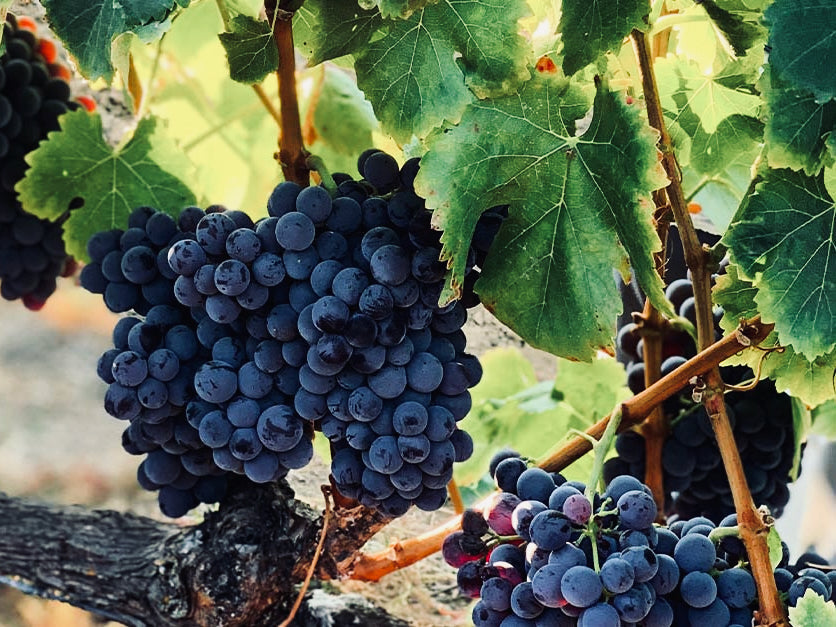
Grenache Noir is one of Europe’s oldest and most widespread blue grape varieties and a key variety in both classic and modern winemaking in southern France and northeastern Spain. The grape is believed to have originated in the Aragón region of Spain, where it still goes by the name Garnacha Tinta, and has been documented since the Middle Ages. During the 14th and 15th centuries, Grenache Noir spread to Roussillon and the Rhône Valley, where it quickly became a central variety in the region’s red and rosé wines. Today, it is a mainstay of natural, organic and biodynamic winemaking throughout the Mediterranean region.
Grenache Noir currently covers around 200,000 hectares of vineyards worldwide, with the EU accounting for the majority of cultivation. In Spain, over 90,000 hectares are planted – particularly in Aragón, Navarra and Catalonia – while France has around 80,000 hectares, mainly in Rhône, Languedoc-Roussillon and Provence. Grenache Noir is also grown on a smaller scale in Italy and on the Greek islands, often in traditional blends. Despite its previous decline in popularity in mass production, the grape is currently experiencing a strong resurgence among quality-oriented producers, particularly in the natural wine community.
What makes Grenache Noir unique is its ability to combine sun-ripened fruit with a surprisingly light and transparent structure. The grape is naturally high in sugar, resulting in wines with high alcohol – often over 14% – but at the same time it has low acidity and soft tannins, creating round and approachable wines. The flavour profile offers red berries, dried herbs, licorice and warm spice, but can also appear floral and almost Burgundian in cooler microclimates or when harvested early.
In natural and organic winemaking, Grenache Noir has become particularly popular because it responds well to low-intervention methods: spontaneous fermentation, maceration, aging in cement or neutral barrels, and little or no addition of sulfur. The grape's openness to terroir makes it an ideal mediator of soil and climate, and many winemakers use it to create wines with both depth and freshness. Grenache Noir also appears in a growing production of orange wine, especially in blends with white varieties in co-fermentation, and in many southern French rosés, where it contributes color and fruit.
In other words, Grenache Noir is not just a historically important variety – it is today a versatile and contemporary grape that, in the hands of both classic and modern winemakers, manages to express everything from elegance and minerality to warmth and power. It is inevitable in any conversation about natural and biodynamic wine from southern Europe.
Read More